One Supplier Has Been Making Roofs That Fly Off for Sixteen Years
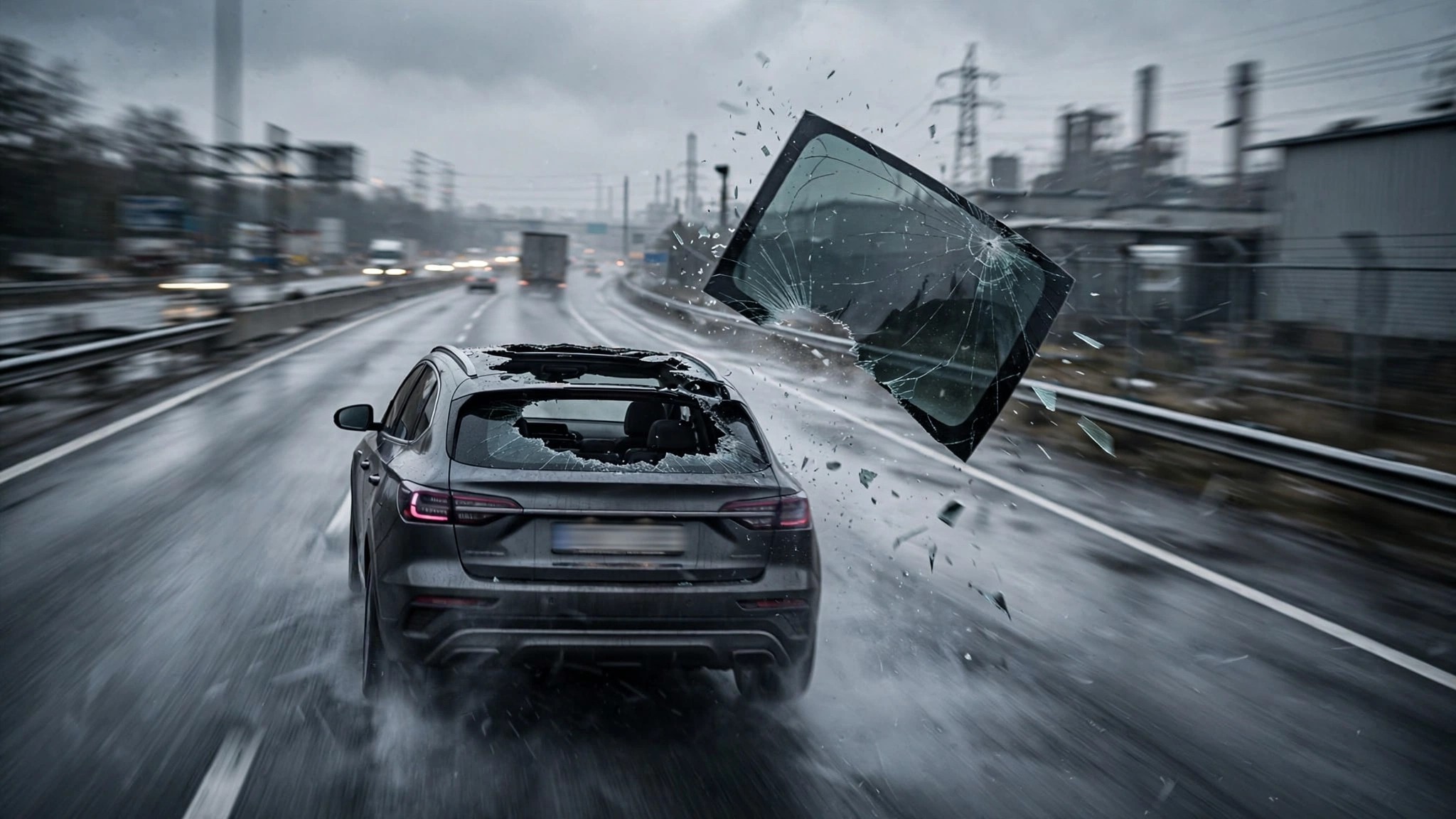
Subaru recalled 69,663 Foresters last week because the moonroof glass can detach at highway speed. Webasto Roof Systems, out of a Kentucky plant, supplied the moonroof assemblies. Insufficient primer between the glass panel and its metal frame caused the separation. Improper bonding, adhesive deterioration, glass panel separation.[1]
That exact language appeared in a Webasto recall filing in 2010.[2]
Webasto SE, headquartered in Stockdorf, Germany, is the world's largest automotive roof systems manufacturer. They control north of fifty percent of the global sunroof and moonroof market. When your car has a panoramic roof, odds are better than a coin flip that Webasto made it. And for sixteen years running, their glass has been separating from their frames in the same way, for the same reason, with the same NHTSA defect language, across at least three continents and multiple OEMs that apparently never compared notes.
The Hollandia-series recalls between 2010 and 2012 were the opening act: aftermarket sunroofs installed on everything from Holdens in Australia to passenger vehicles across the US Midwest, all suffering from what NHTSA called "the adhesive bond between the glass and the metal frame can debond."[2] Australia alone recalled roughly 50,000 vehicles spanning Ford, Holden, and aftermarket installations.[3] The language in every filing was carbon-copied: corrosion around the frame, wind noise, vibration, visual bond separation, water leakage, and then the glass leaves your vehicle and becomes someone else's problem at seventy miles per hour.
Then came Mercedes-Benz, which has been recalling Webasto-supplied sunroofs in overlapping waves since 2020. The first round covered 744,852 vehicles, a staggering number that suggested the defect wasn't isolated to a bad production batch but baked into the manufacturing process itself.[4] A second recall in 2021 added 11,356 cars. A third in 2022 swept up another 123,696, plus 2,976 vehicles that had been improperly repaired during the first recall, which is its own kind of punchline. By 2024, Mercedes was on recall number four, adding 33,456 more C-Class, E-Class, CLK, and CLS models from 2001 to 2011. NHTSA filing 24V-874 names Webasto Roof & Components SE as the supplier and describes a defect you've already read three times: the bonding agent deteriorates, the glass panel separates.[5]
Add it up across the Mercedes campaigns alone: approximately 916,000 vehicles. Nearly a million cars, all built by different teams across different model years and different platforms, all sharing one component supplier and one failure mode.
Now Subaru. The 2026 Forester recall traces the defect to Webasto's Kentucky facility, where some moonroof assemblies did not receive the proper amount of primer before the adhesive was applied.[1] Subaru says only about 2.9 percent of the recalled vehicles are estimated to actually have the defect, which works out to roughly 2,020 Foresters with roofs that might leave them. Three separation incidents were reported between late February and late March 2026. No crashes, no injuries.
The FARS data makes this especially grating. The Subaru Forester posts a fatality rate of 0.26 per 100 million vehicle miles traveled, which places it among the five safest compact SUVs on American roads.[6] The segment average sits at 0.44. The Jeep Cherokee, at the other end of the ranking, kills at 1.73, a rate 6.6 times higher than the Forester. Subaru spent decades engineering a vehicle that protects you inside the cabin during a collision, earning consistent IIHS Top Safety Pick recognition along the way.[7] None of that matters if the roof separates at highway speed because a supplier in Kentucky skipped a step.
No crash test evaluates whether your roof stays attached. IIHS tests side impact, front overlap, rear-end whiplash, pedestrian protection, headlight performance. NHTSA rates rollover resistance and frontal barrier crashes. Nobody rates adhesive primer application at the sunroof supplier's third-shift production line. That gap is the whole story: the safety apparatus measures what happens when physics fails you, not when quality control does.
Webasto's market dominance means there is no competitive pressure to solve this because there is no credible alternative supplier at scale. OEMs don't switch roof system suppliers the way they swap tire brands. Tooling is vehicle-specific, lead times run years, and the sunroof is integrated into the body structure during assembly. If you want a panoramic roof on a mass-market vehicle in 2026, you're probably calling Webasto. And if you're calling Webasto, you're trusting the same company that has filed near-identical defect reports across sixteen years to get the primer right this time.
The counterargument is volume. Webasto supplies millions of roof systems annually, and the defect rate on the Subaru recall is under three percent. Measured against total production, these recalls represent a small fraction of output. The Mercedes recalls span twenty model years and four vehicle platforms, which makes a systemic read less clean. Some batches fail; most don't, and manufacturing at this scale is inherently imprecise.
That argument would be more persuasive if the failure mode changed, or if the root cause was different each time, or if sixteen years of recalls had produced a durable fix. The Mercedes saga is instructive: the first recall in 2020 did not prevent the second, which did not prevent the third, which did not prevent the fourth. Each time, the scope expanded to vehicles that had fallen outside the prior campaign. Each time, the defect description was the same. Webasto changed the primer drying time at some point in the 2010s, per Mercedes' own chronology in the 24V-874 filing. It didn't stick. Literally.
Subaru owners with a 2026 Forester should check their VIN at nhtsa.gov/recalls. Dealer notifications are expected July 24. Inspection is visual and non-destructive, and replacement is free. If you hear unusual wind noise or notice anything shifting around your panoramic moonroof before then, do not wait for the letter.
Sources & References
- NHTSA, Subaru Forester/Forester Hybrid Recall, 69,663 vehicles, filed May 28, 2026. Supplier: Webasto Roof Systems Inc. (KY). nhtsa.gov
- NHTSA, Webasto Hollandia 600/700/900 Series Sunroof Recalls, 2010–2012 (Recall Nos. 10V-432, 10V-526, 11V-124, 12V-131). nhtsa.gov
- GoAuto, “Sunroof Recall,” reporting ~50,000 vehicles recalled in Australia (Holden, Ford, aftermarket Webasto installations), 2010. goauto.com.au
- Hagerty Media, “Mercedes-Benz Recalls Nearly 33,500 Older Models Due to Sunroofs That Can Come Loose,” Dec. 2024. Prior recalls: 744,852 (2020), 11,356 (2021), 123,696 (2022). hagerty.com
- NHTSA, Part 573 Safety Recall Report 24V-874, Mercedes-Benz, 33,456 vehicles MY2001–2011. Supplier: Webasto Roof & Components SE (Germany). static.nhtsa.gov
- NHTSA, Fatality Analysis Reporting System (FARS), 2014–2023. Subaru Forester: 396 deaths, 1.225M estimated fleet, 0.26 rate per 100M VMT. nhtsa.gov
- IIHS, Vehicle Ratings. Subaru Forester: consistent Top Safety Pick / Top Safety Pick+ recipient. iihs.org
Source: NHTSA FARS 2014–2023, NHTSA recall filings 2010–2026. Fatality rates are estimated from fleet size and VMT assumptions; see methodology for caveats. Recall vehicle counts are from NHTSA Part 573 filings and may include overlapping populations across campaigns.