6 of 15 “Safe” Teen Cars Have Above-Average Death Rates. The List Doesn't Mention It.
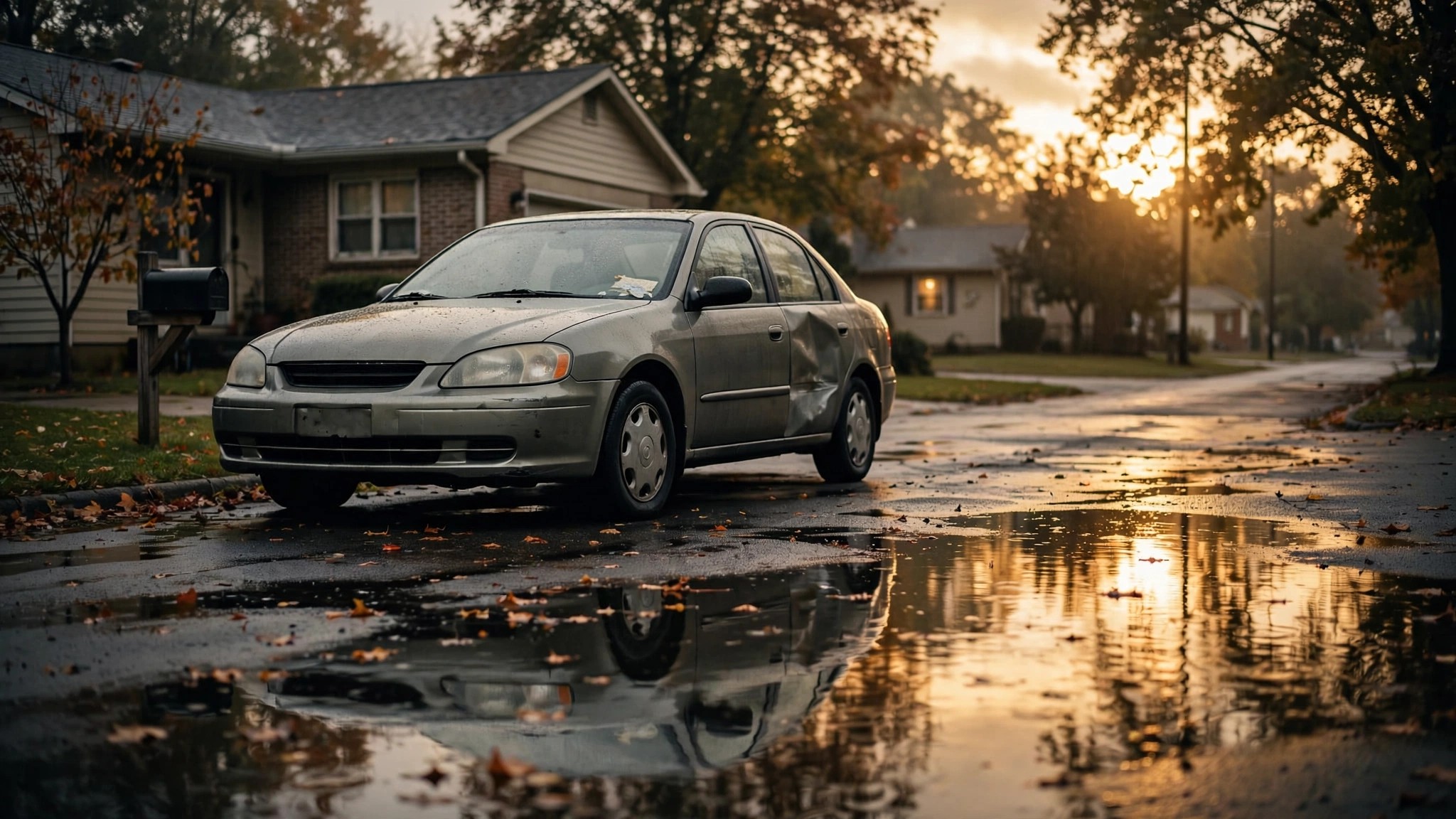
I ran the 2026 IIHS/Consumer Reports teen driver recommendation list against a decade of FARS fatality data.[1] Then I ran it again. Six of fifteen recommended sedans kill at rates above the segment average. The Honda Accord, cornerstone of every "buy your kid something safe" conversation in America, posts a fatality rate of 3.07 per 100 million VMT.[2] The sedan average is 1.46. That's a 2.1x multiplier on a car that aces every crash test IIHS administers.
The full scatter plot is grim, and it gets worse the further down the sedan list you read. The Honda Civic posts a 2.25 rate, or 1.54 times the segment average; the Nissan Sentra hits 2.13 at a 1.46x ratio; the Toyota Corolla lands at 1.85; and both the Hyundai Sonata (1.56) and Hyundai Elantra (1.50) barely clear the line while still exceeding the mean. Every one of these passed IIHS's battery of frontal overlap, side impact, roof strength, and head restraint tests with Good ratings before earning a spot on the "safe for teens" list. Every one of them kills above the median rate for its class in the real world, where tests don't control for speed, road geometry, vehicle age, or who's behind the wheel at 1 a.m. on a Saturday.
Flip to the SUV column and the numbers collapse by an order of magnitude: the Subaru Crosstrek posts 0.08, the Mazda CX-5 manages 0.12, the Toyota RAV4 sits at 0.19, and the Honda CR-V rounds out at 0.53. Crosstrek's rate is 38 times lower than the Accord's, not 38 percent lower, not a factor of 3.8, but a full order-of-magnitude-plus gap between two vehicles that sit side by side on the same recommendation list, published by the same organizations, with the same stated goal of keeping teenagers alive.
Median used pricing for recommended sedans on this list runs $4,700 to $8,300, and a used CX-5 costs about $13,100, which means that $4,800 gap between the cheapest sedan and the cheapest crossover buys a 25x reduction in fatality rate per mile driven. No other automotive purchase decision yields that kind of return, not AEB, not lane-keeping assist, not even a newer model year, though all of those help at the margin. The single largest predictor of whether your teenager survives a crash in these vehicles is not the crash-test rating printed on the window sticker but the mass and ride height of the vehicle they're sitting in, compounded by the demographics of who else drives that model and what condition the fleet is in.
IIHS would push back, and they'd be partly right. Their recommendations specify model years precisely because a 2020 Accord with automatic emergency braking is a fundamentally different machine from a 2008 Accord with none of it. FARS data captures the entire fleet, all model years, all conditions, all the 17-year-olds who inherited a 2006 Civic with 160,000 miles and bald tires. That aggregation is unfair to the specific vehicles IIHS evaluated, and both organizations know it, which is why they set minimum model-year thresholds for their picks. But parents buying a first car don't always follow the footnotes. They see "Honda Accord" on a safety list, find one within budget on Craigslist, and trust that the name carries the rating. The FARS data captures what actually happens next: 7,102 people dead in Accords over a decade, the third-highest body count of any vehicle in the national database.
The original contribution here is the cross-tabulation itself, because nobody at IIHS, Consumer Reports, or the major auto outlets has published a direct overlay of the teen recommendation list against per-model FARS fatality rates. Crash-test organizations measure how well a car protects you once you've already hit something, while FARS measures how often you die, full stop, across every variable that crash tests deliberately exclude: driver experience, road conditions, vehicle maintenance, fleet age distribution, geographic exposure, and the fundamental physics of mass differential when a 3,100-pound sedan meets a 5,400-pound pickup at an intersection.
If your budget allows a crossover, buy the crossover. The Mazda CX-5, Subaru Crosstrek, and Toyota RAV4 have both the crash-test ratings and the real-world survival data to justify the recommendation. If your budget forces a sedan, the Kia Forte (0.40 per 100M VMT) and the Subaru Impreza (0.52) are the lowest-fatality options on the list. Whichever vehicle you buy, verify the model year against the IIHS recommendation, check the VIN at nhtsa.gov/recalls, and know that the safest car for a teenager is the one they can't drive too fast because you installed a speed limiter and took the back roads home.
Sources & References
- IIHS/Consumer Reports, Recommended Vehicles for Teen Drivers, June 5, 2026. iihs.org
- NHTSA, Fatality Analysis Reporting System (FARS), 2014–2023. Fleet estimates from US vehicle registration and sales data; VMT from NHTS annual miles. nhtsa.gov
- IIHS, Fatality Statistics: Passenger Vehicle Occupants. iihs.org
- IIHS, Vehicle Size and Weight. Research on the relationship between vehicle mass and occupant fatality risk. iihs.org