The Truck Industry Asked for Three More Years of Weaker Seatbelt Testing. NHTSA Said Sure.
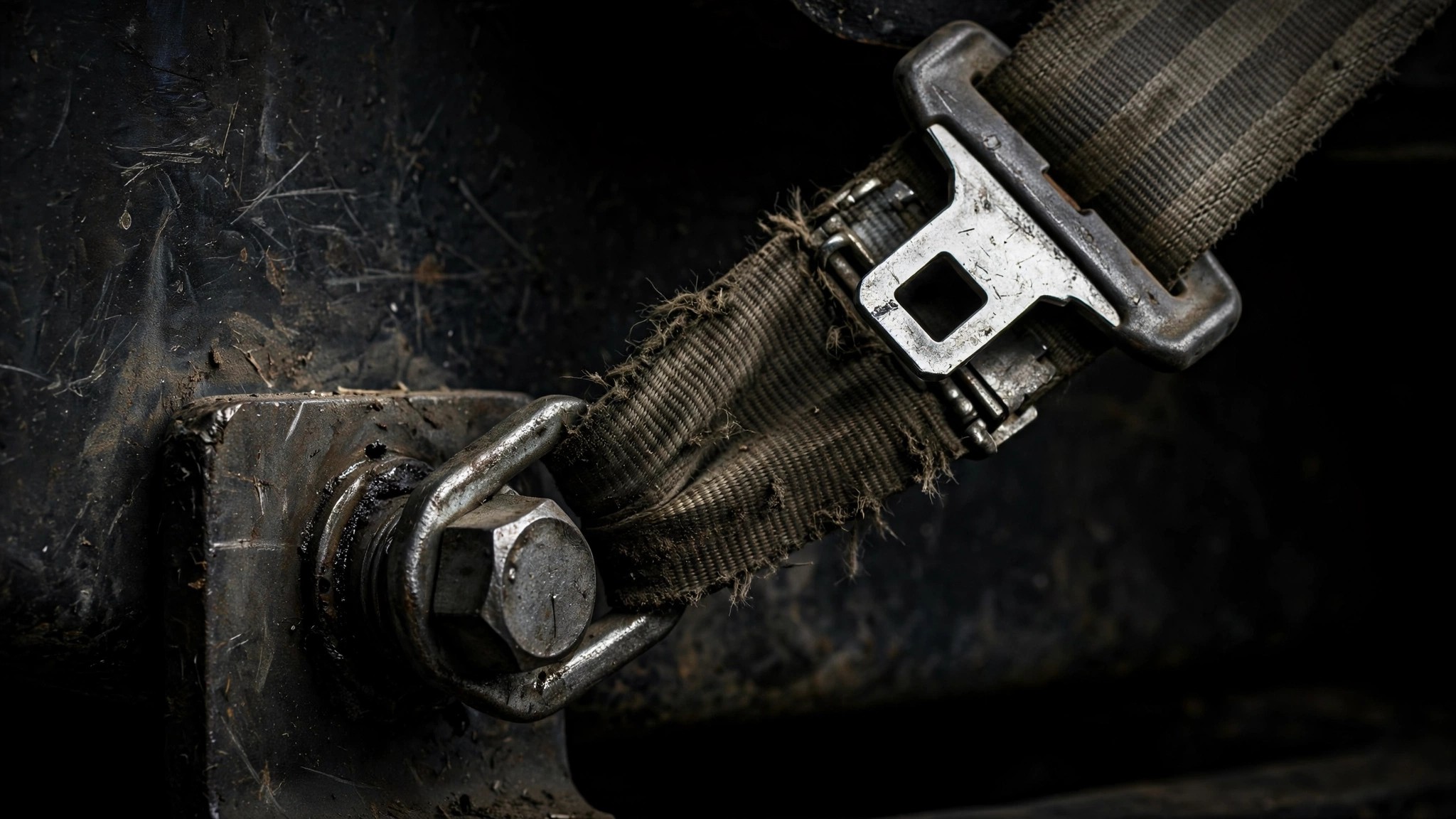
Last September, NHTSA finalized an update to FMVSS No. 210, the federal standard governing seatbelt anchorages. Revised test procedures, more realistic force patterns, an alternative test device. All vehicles were supposed to comply by September 2027. Then industry filed a petition. Now NHTSA is proposing to push the deadline for heavy trucks to September 2030.[1]
Three years. Vehicles over 10,000 pounds GVWR get to keep meeting old anchorage test protocols while lighter SUVs and cars move to updated standards on schedule. Industry said it needs more time. NHTSA agreed. Comments are due July 27.
Consider what else happened in 2023. IIHS launched an updated moderate overlap crash test after research showed that belted rear-seat occupants now face higher fatal injury risk than front-seat occupants in newer vehicles.[2] Front seats got safer. Rear seats did not. Every full-size truck earned "Poor" for rear-seat protection: F-150, Silverado, Ram 1500.[3] Only Toyota's Tundra avoided a "Poor" overall, and it still showed rear-seat submarining.
Seatbelt anchorages are the structural backbone of restraint systems. If an anchor point fails, the belt goes slack. Updated testing catches failure modes old procedures miss. Nothing radical in what NHTSA finalized. Just an acknowledgment that the existing protocol was measuring the wrong things.
Run the numbers. FARS records 4,159 pickup truck occupant deaths per year on average from 2014 to 2023. Silverado: 959 per year. F-150: 919. Over a three-year delay window, roughly 12,477 pickup occupants will die in fatal crashes. Even a 1% prevention rate from better anchorage testing means 125 people whose belts might have held. Heavy-duty trucks over 10,000 pounds (F-250: 909 deaths over the decade, Ram 2500: 153) are the exact vehicles getting the pass.[4]
A pattern worth naming: NHTSA finalizes a standard, industry petitions, compliance date slides. That same week, NHTSA announced it would begin considering whether to require emergency door egress systems in all vehicles. That rulemaking, the agency noted, "often takes years."[5] Safety standards arrive on geological timescales. Delays arrive on request.
A standard designed to improve their seatbelt anchors was finished. Ready. And now the vehicles that need it most get to wait three more years.
What you can do
If you drive or ride in a full-size truck, know that rear-seat protection lags behind the front by years of engineering. Check whether your truck's rear seats have pretensioners (most do not). Public comments on the proposed delay are open through July 27, 2026 at regulations.gov, docket NHTSA-2025-0039. Check your VIN for open recalls at nhtsa.gov/recalls.
Limitations
FARS captures only fatal crashes. Seatbelt anchorage testing is one component of occupant protection; updated procedures alone would not eliminate rear-seat fatalities. Our 1% prevention estimate is illustrative, not empirical. NHTSA has not published projected fatality reductions for this specific update. Most consumer pickups (F-150, Silverado 1500, Ram 1500) fall below 10,000 lbs GVWR and will comply on the original 2027 timeline.
Strongest counterargument
EMA argued that retooling for updated test devices requires lead time the original compliance date did not provide. Heavy truck production runs are lower volume, and test facility scheduling is more constrained. A 2027-to-2030 delay may be the difference between validated hardware and rushed implementations that create new problems. NHTSA's willingness to propose the delay suggests technical merit in the petition.
Sources & References
- Federal Register, June 26, 2026. “Response to Petition for Reconsideration, Federal Motor Vehicle Safety Standards; Seat Belt Assembly Anchorages.” Docket NHTSA-2025-0039. federalregister.gov
- IIHS, “IIHS launched the updated moderate overlap front test last year after research showed that in newer vehicles the risk of a fatal injury is now higher for belted occupants in the second row than for those in front.” iihs.org
- IIHS full-size pickup truck crash test results, 2023–2024. F-150, Silverado 1500, Ram 1500 rated “Poor” in updated moderate overlap rear-seat test. Toyota Tundra rated higher but still showed rear-seat submarining. iihs.org/ratings
- NHTSA, Fatality Analysis Reporting System (FARS), 2014–2023. Pickup truck deaths by model. nhtsa.gov
- Reuters, July 24, 2026. “US agency rejects petition seeking Tesla door-release defect probe.” NHTSA noted rulemaking “often takes years.” reuters.com